
Backrooms - It got me thinking!
6/15/2026
Miami. 1990.
I was fourteen, and I filmed everything.
My dad had moved us there — long story, something to do with flying scuba gear to the Bahamas — and I had an old VHS camcorder in my hands most of the time. Those tapes have become my rose-tinted window onto childhood. Not photographs, not exact memories. The texture of it — the tracking lines, the colour bleed, the way time looked slightly wrong — that's what I carry.
The medium became the memory.
I sat in a cinema in 2026, with my son beside me, and watched The Backrooms. I didn't know I was thinking about 1990 until after the lights came up.
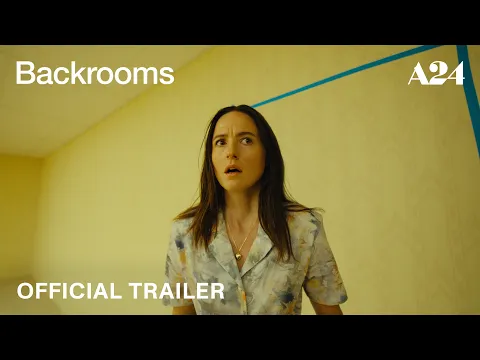
Kane Parsons built this mythology on YouTube, one video at a time. If you weren't watching, the internet was — and it didn't stop. The found footage aesthetic, the institutional wrongness of those corridors, the sound design that made you feel you'd entered somewhere you had no clearance to be. It caught something. That particular frequency of dread that travels straight past your reasoning brain.
The film amplifies it.
For a first-time feature director to construct something this coherent, this immersive, this precise — it's a significant achievement. Whether you arrive already familiar with the mythology or walk in completely cold, there's a film here that works. That's harder than it sounds. What it builds is complex, unforgiving — and crucially, unexplained.
It doesn't explain itself. It doesn't soften. Both decisions are exactly right. For my money, it lands the way The Blair Witch Project landed — as a generational ambush.


Here's where the editor's hat goes on.
Working in broadcast television for 25 years, there's a note I've heard more times than I can count — from the people who shape the final editorial structure: "Hold the hand of the audience through this bit."
Netflix reportedly builds deliberate exposition moments into its films and series. The logic is sensible enough: if you're watching with one eye on your phone, these plot refresh points make sure you haven't lost the thread. The story pauses. Dialogue circles back. Key information gets restated.
If you're actually paying attention, you feel it. And it costs something.
The Backrooms does none of that.
If you're watching — genuinely watching — you get enough. The film gives you what you need to keep going, then trusts you to sit with everything it hasn't explained.
From one viewing, it already feels like something that wants you back. But it's not asking you back to find what you missed.

“If I could snap my fingers and make generative AI disappear forever, I probably would.”
KANE PARSONS
The Backrooms is built in layers — literal floors, each one a version of something. Each descent takes you deeper into spaces that feel like corrupted memory. Rooms that are almost right. Textures that register as familiar before your brain can name why.
The film isn't inviting you back for a second viewing. It's inviting you down another level.
And here's the connection I haven't been able to shake: that architecture — rooms made of degraded, half-familiar texture — is exactly what VHS does to memory. The tracking lines and colour bleed aren't flaws. They're how that time lookswhen I reach for it. The medium shaped the memory. And the Backrooms, as a physical space, as a film, as a mythology, is built from exactly that mechanism — the universal attempt to remember, and finding the memory already shaped by the format it was stored in.
Everyone has a version. A medium that carried your earliest years and bent the light of them. The specific — my camcorder, Miami, 1990 — is the bait.
The meal is that feeling of almost-recognition. The room that's slightly wrong.
The Backrooms knows exactly what it's doing with that.
Architecture as memory theory. Never once explained! Bravo!
9/10 from me on this one!